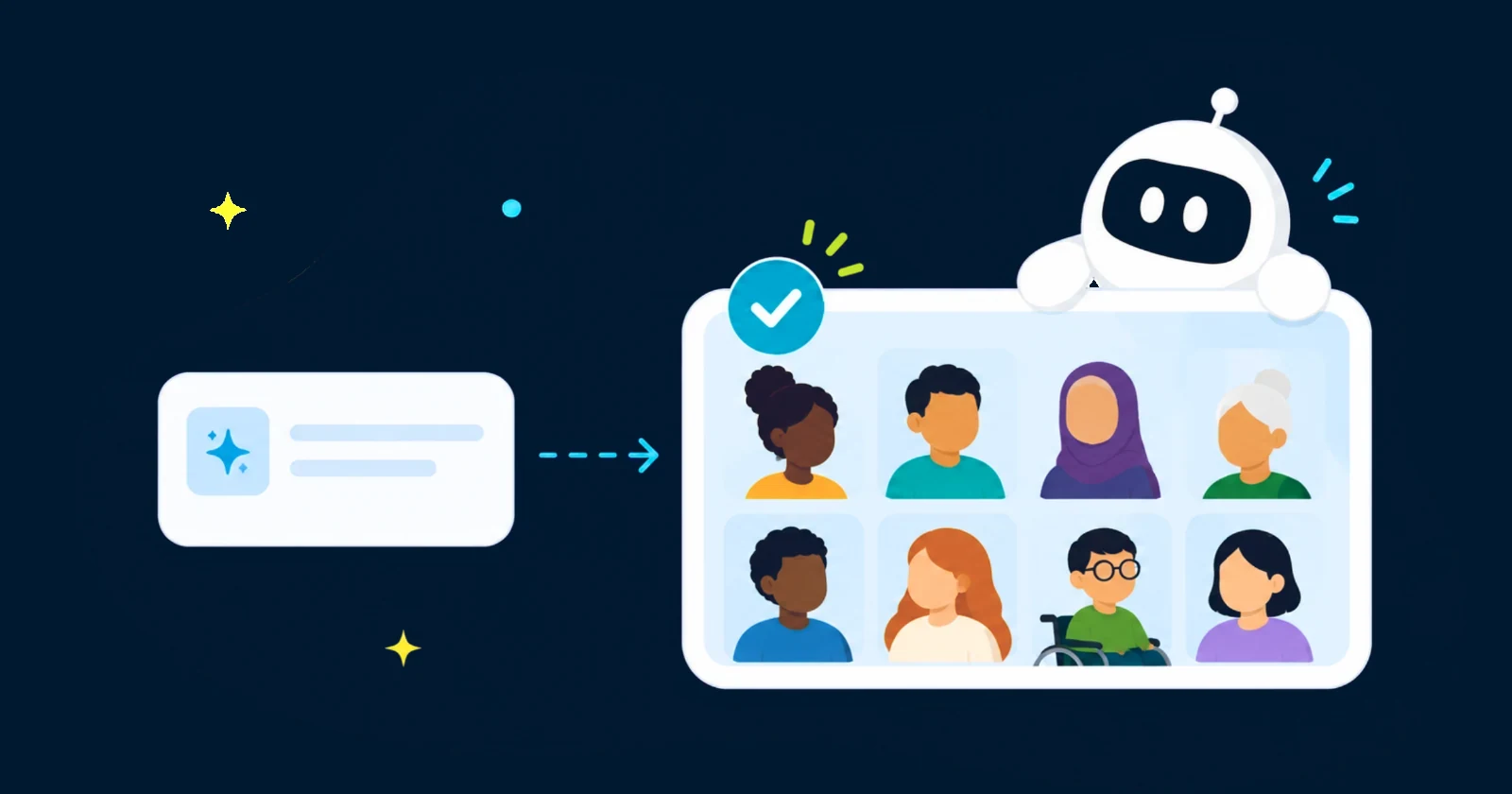


Every unit plan CARL builds arrives with three things you didn’t ask for.
Short suggestions for Equity and Inclusion. Social Emotional Learning. Trauma-Informed Safeguards. They’re written for that unit, not pulled from a generic list.
You can edit them. You can remove them. What you can’t do is switch them off before the unit is generated.
That’s us making a decision on your behalf, which is worth explaining.
Why those three
The plain answer is that they matter to me, and I would rather say so than dress it up as a neutral product decision.
Teachers tell us they want to include this work. They also plan under time pressure, with more competing demands than any planning interface can hold. The thing that matters can still be the thing that gets forgotten when the unit is due Monday.
That’s a capacity problem, and capacity problems are something a tool can help with. We decided the minimum useful starting point was to make these three visible every time, then leave the decision about using, changing, or deleting them with the teacher.
They’re written for the actual unit
In a Grade 6 Science unit on Newton’s laws in the playground, the Equity and Inclusion suggestion says:
“Ensure playground examples reflect diverse physical abilities by analyzing how adaptive swings and wheelchair-accessible ramps utilize the same laws of motion.”
That puts disability inclusion inside the science analysis instead of attaching it afterward.
In a Grade 10 Mathematics unit on right-triangle trigonometry and clinometer fieldwork, the Social Emotional Learning suggestion says:
“Normalize the frustration of getting different angle readings by framing discrepancies as a natural part of field science rather than a mathematical failure.”
In a Grade 1 Science unit about observing, recording, and predicting local weather, the Trauma-Informed Safeguards suggestion says:
“Avoid asking students to share personal stories of extreme weather events that may have caused displacement, property damage, or distress in their families.”
A risk like that hides easily inside what looks like an ordinary personal-connection prompt.
None of these is a reminder to “consider inclusion.” Each one points to a decision inside the content, activity, or discussion.
Unit-level and lesson-level enhancements do different jobs
CARL also has a separate Lesson Enhancements suite with six modules:
- UDL and Differentiation
- Equity and Inclusion
- Student Voice and Choice
- Social Emotional Learning
- Trauma-Informed Safeguards
- Indigenous Resource Pathways
These aren’t all generated automatically. A teacher opens Lesson Enhancements and chooses which modules to generate for a particular lesson.
Three names overlap with the automatic Unit-Level Lesson Enhancements, but the jobs are different. At unit level, the suggestion looks across the arc and the assumptions built into it. At lesson level, the resource can focus on what happens during one activity, with these instructions, on this day.
Why we didn’t generate all six automatically
Part of the answer is technical. Lesson and unit generation already carry dense instructions. Adding every enhancement to the initial generation can make the instructions compete with one another and reduce the reliability of the core plan.
Part of the answer is teacher choice. Not every lesson needs the same intervention at the same depth.
Indigenous Resource Pathways adds another responsibility. It uses a separate reviewed resource database and its own instructions. Folding that process into every initial generation could increase the risk of invented connections, hallucinated resources, or other errors in the area where responsible sourcing matters most. For now, it’s generated separately when the teacher chooses it.
The bottom line
- Every unit includes short suggestions for Equity and Inclusion, Social Emotional Learning, and Trauma-Informed Safeguards
- They appear by default because we consider them a minimum useful prompt, even when planning time is short
- Teachers can edit or remove them after generation
- The six Lesson Enhancements modules are generated separately, and teachers choose which ones they want
- Indigenous Resource Pathways uses a separate reviewed database because responsible sourcing needs different safeguards
The three showing up isn’t us telling you what to teach. It’s us making sure a Sunday-night deadline isn’t the only thing deciding whether you saw them. What you do next is yours.
Explore CARL’s built-in supports and Lesson Enhancements.