Lesson plans where every student can see themselves
Hi, let us introduce ourselves. We’re Courtnay and Sam, husband and wife, and CARL’s co-founders. We both grew up in predominantly white communities, so we know what it is to scan every worksheet, every storybook, every poster for someone who looks like you, and how loud it is when nobody does. Representation isn’t a checkbox for us. It’s validation that people who look like our family exist.

A note from someone whose kids are in the classroom.
I studied sociology before I ever built software, so I can hand you the citations: representation shapes belonging, and belonging shapes learning. But I didn’t need the degree to know it. I learned it in grade three, in a classroom where the perspectives we studied were rarely anything like mine.
The fix was never a heritage-month poster. It’s the ordinary Tuesday materials, the names in the word problems, the families in the story prompts, who gets to be the scientist on the worksheet. That’s why diverse defaults are baked into what CARL drafts instead of sold as a setting you switch on.
My daughters will sit in classrooms full of materials made by tired teachers at 9 p.m. I want the defaults quietly working for them, and for every kid doing the same scan I did, whether they realize they’re doing it or not.
Representation isn’t a unit. It’s a default.
Most classroom materials still default to the same names, the same families, the same faces. Not out of malice, out of momentum: when you’re planning at 9 p.m., you use what the generator gives you, and most generators give you 1995.
CARL’s defaults are different. Materials it drafts reflect the diversity of real Canadian classrooms: names from many cultures, varied family structures, people of different backgrounds and abilities doing the interesting things in the examples. And when you want to go further, deliberately centring particular voices, contexts, or histories, you set that direction and CARL builds with you.
Free to start. No student names, no personal data.
Every unit plan ships with an equity read on itself.
You don’t ask for this part. Every unit plan CARL drafts carries a built-in Equity block: a short, specific read on where this exact lesson could quietly exclude someone, and what to do about it. Not boilerplate, written against your actual topic. Straight from real generated plans:
Communities & Belonging
Center diverse cultural heritages, including local First Nations, Métis, and Francophone communities, as foundational to our shared identity rather than treating them as optional additions.Grade 2 Social Studies · unit plan
Weather Watchers
Incorporate weather stories and terminology from local Indigenous communities in Newfoundland and Labrador to value diverse ways of observing seasonal patterns.Grade 1 Science · unit plan
Fractions in the Real World
Use recipe and sports contexts that draw from a wide variety of cultural traditions and games to avoid centering a single cultural default.Grades 6–8 Math · unit plan
Homes & Belonging
Represent a range of family structures, including single-parent, multigenerational, blended, and same-gender-parent families, so every student can see their own home reflected.Grade 1 Social Studies · unit plan
These arrive automatically, alongside the SEL and trauma-informed notes, on every unit plan.
Ask for the enhancement sheet. Get a page of this.
The Lesson Enhancements sheet is the on-request deep dive: six modules of teacher guidance with ready-to-use student-facing language, including a full Equity & Inclusion Practices module and an Indigenous Resource Pathways module, written for your specific lesson. Open the real sheets below and read them yourself, a few standouts:
Preview coming soon
A real CARL document will render here, scrollable and ready to print.
Critical thinking about archival photos
When we look at how PEI changed, we can ask: Whose jobs and homes are we seeing in these pictures, and whose stories might still be missing?Grade 2 Social Studies
Perspective-taking inside a science lab
How might a farmer, a builder, and an Indigenous land protector look at this same patch of soil differently? What matters most to each of them?Grade 3/4 Science
Equity that still teaches fractions
Think about a favorite dish or recipe from your family or community. How do you measure the ingredients, and how might we write those amounts as fractions?Grades 6–8 Math
Different experiences, more clues
My background knowledge might be different from my partner’s because of our different experiences, and that helps us see different clues in the story.Grade 4 English
Every example on this page is quoted verbatim from a generated document, including the ones in the viewer above.
The whole classroom, not the poster version.
Racial and cultural representation
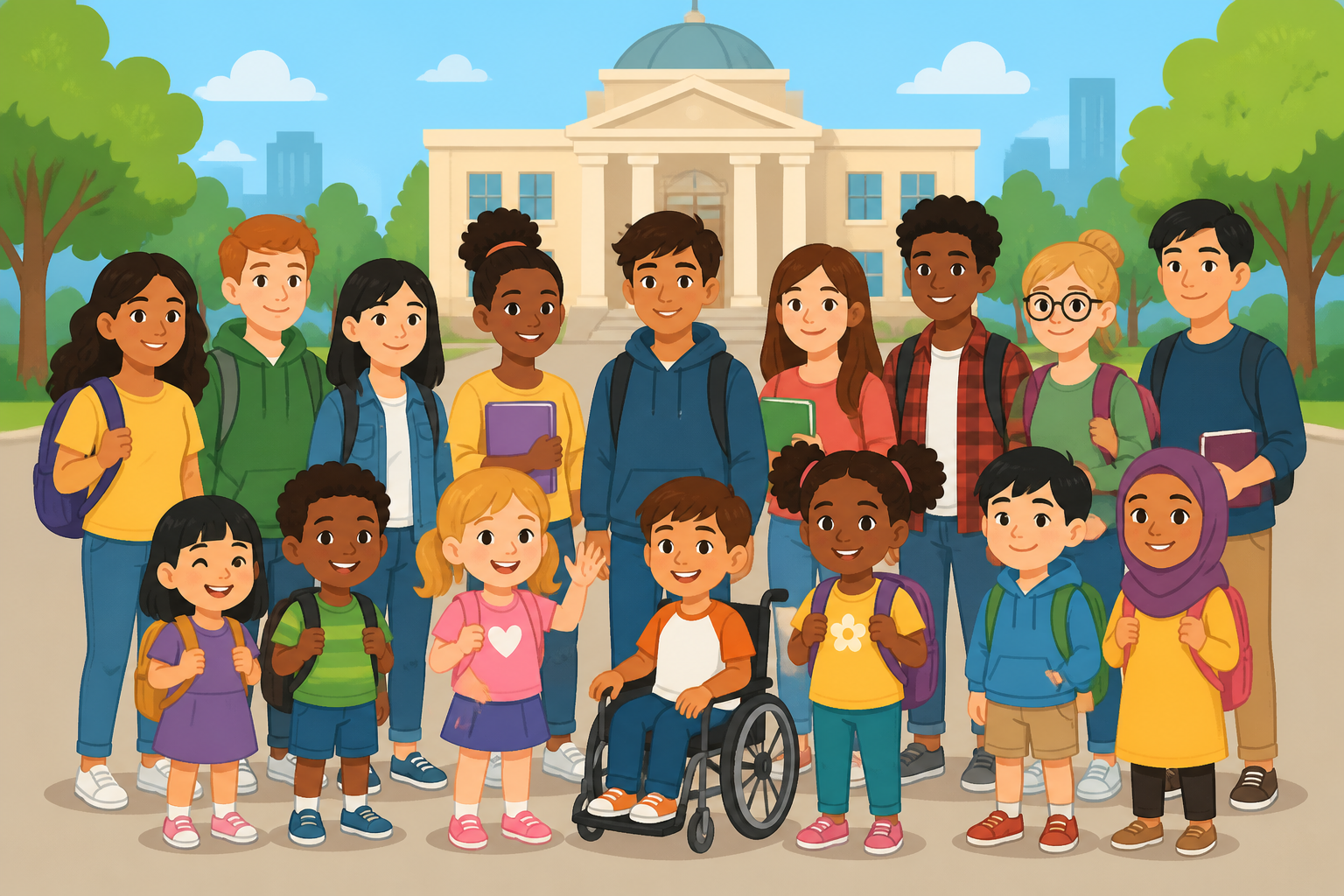
Examples, texts, and problem contexts that reflect many cultures without reducing anyone to a food or a festival. Support for exploring histories and contributions across the year, not just designated months.
Gender-inclusive materials
Balanced representation in roles and examples, mixed pronouns where natural, and materials that don’t assume who likes what.
2SLGBTQ+ inclusive classrooms
Family diversity in story prompts and examples, age-appropriate inclusive language, and support for planning around days like Pride and the International Day Against Homophobia, Biphobia and Transphobia, at the depth that fits your grade and community.
Family and socioeconomic diversity
Examples that don’t assume two parents, a house, a car, or a summer vacation. Small thing; the kids notice.
Anti-racist teaching support
Help structuring lessons around discrimination, bias, and justice topics in your curriculum, with discussion scaffolds and age-appropriate framing you control.
Newcomer and multilingual contexts
Materials that treat multilingualism as an asset, and content that reflects the experience of students who are new to Canada.
Indigenous content comes from Indigenous sources. CARL makes the introduction.
CARL doesn’t generate Indigenous knowledge, that’s a line built into the design. Instead, every enhancement sheet includes an Indigenous Resource Pathways module: teacher-facing guidance that matches your lesson to authentic, Indigenous-authored resources, and tells you honestly when there isn’t one.
Real matched sources
A soil unit gets A Day with Yayah by Nicola I. Campbell. A community-belonging unit gets My Heart Fills With Happiness and We All Play. A habitats unit gets Braiding Sweetgrass for Young Adults. Each match comes with guidance on where in the lesson arc it fits.
Honest when there’s no match
No authentic source fits glider aerodynamics or comparing fractions? The pathway says exactly that, and points you to a starting hub like the NCTR instead of inventing a connection.
Local context first
Every pathway ends the same way: identify the Nations whose territory your school sits on, and confirm local guidance. In the sheets’ own words: a bridge to community relationship, not a replacement for it.
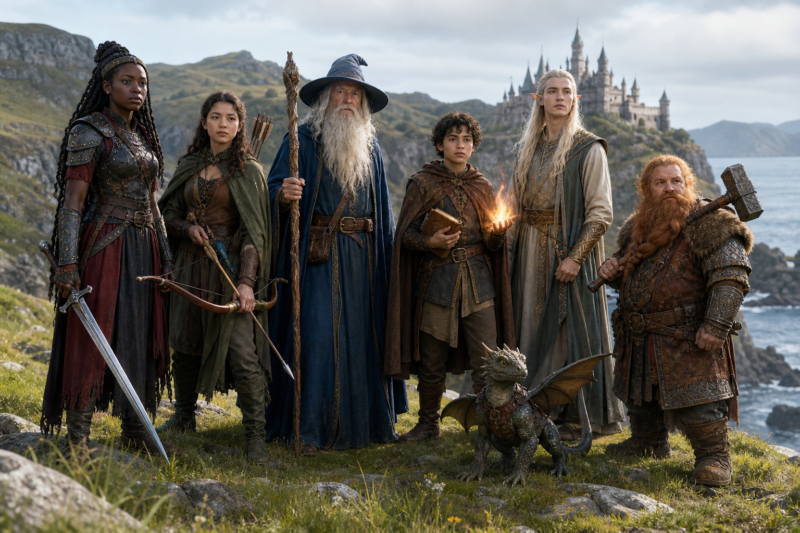
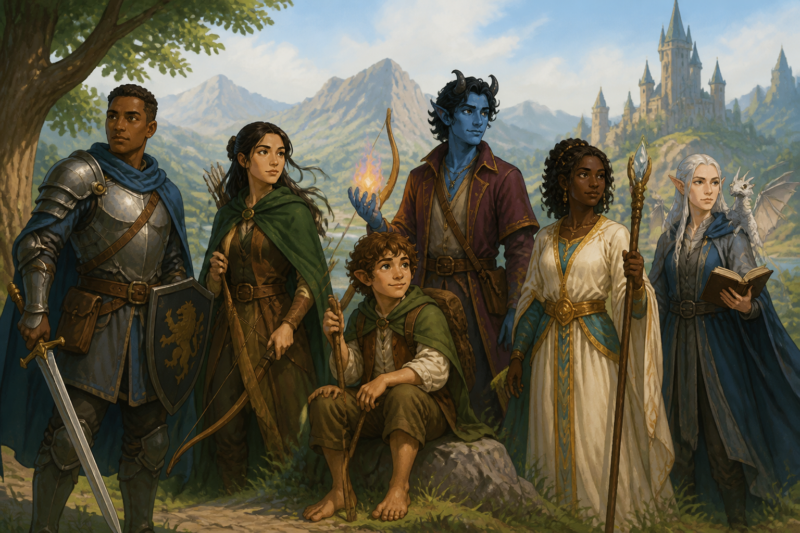
When you generate an image, everyone gets to be in it.
Ask for a fantasy party and CARL aims for a real cast, in whatever style your lesson needs: guardrails guide every image toward a range of age, skin tone, and body type, so the faces on the worksheet look like the faces in the room. Diversity isn’t a setting you switch on; it’s the default.
 Photoreal
 Illustrated
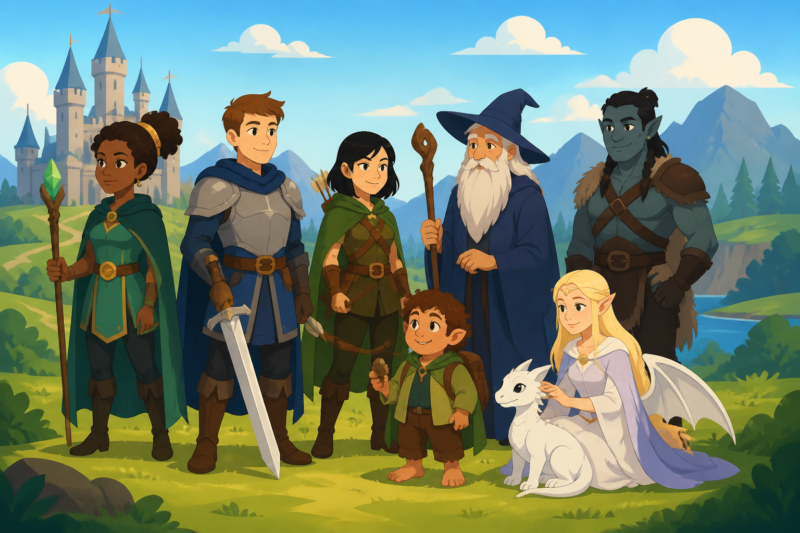 Animated
As always, you make the final call on which images reach students.
Black History Month, Truth and Reconciliation, Pride, and every month in between.
These identities don’t live in a single month, and the lessons shouldn’t either. But the heritage moments are real, and doing them well takes planning time. CARL helps you build substantive lessons connected to your actual curriculum outcomes, so heritage and awareness observances become teaching, not decoration, and part of the whole year:
Black History Month (and Black histories all year)
Lessons connecting Black Canadian histories, sciences, arts, and futures to your curriculum, from Grade 1 community studies to Grade 12 history.
National Day for Truth and Reconciliation & Orange Shirt Day
CARL helps you structure lessons and make room for authentic materials from the NCTR and your local nations. This is content that should come from communities, not an AI, and CARL respects that line.
Pride and identity-inclusive observances
Age-appropriate lessons on respect, identity, and belonging, planned at the depth that fits your grade, school, and community context.
Lunar New Year, Diwali, Ramadan, and more
Cultural observances woven into learning where they fit your class, without tokenism.
Your community, your call.
Classrooms sit inside communities, and teachers know theirs. CARL doesn’t impose a stance or a depth; it works from the direction you set, whether that’s diverse defaults quietly doing their work in a math worksheet, or a full unit on civil rights in Canada. Everything is editable, everything is reviewable, and nothing reaches students without you.
That’s also why this works alongside curriculum alignment: equity-focused lessons still serve your outcomes in your province’s curriculum mode, and still show up in Compass coverage tracking like any other lesson.
Inclusive for identities. Inclusive for learners.
This page is about who students see in their materials. Our inclusive lesson plans page is about how students access learning: UDL, differentiation, ELL scaffolds, and accessibility. Real classrooms need both, and in CARL they’re the same workflow.
Questions teachers ask first.
Every student, in every lesson.
Start with one lesson and see what materials look like when representation is the default.