Unit plan generator for connected, editable lessons.
Anyone can generate five lessons. The hard part is five lessons that build, where Day 3 remembers Day 1 and the assessment matches the arc. CARL plans units the way teachers do: from planning preferences to classroom-ready materials, one connected context the whole way.
Free to start. No student names, no personal student data.
The Earth Beneath Us: three days that build
A summary of the existing Earth Beneath Us Grade 3/4 science demo: three 60-minute sessions. This shows the learning sequence, not a verified curriculum mapping.
Day 1 · Observe and sort
Compare soil components and observable rock properties. Keep observations that students can return to when water enters the investigation.
Check: listen to explanations during soil sorting and rock-property tests.
Day 2 · Test what water changes
Build on those properties: compare drainage through soil samples and observe water moving soil in a tray model.
Check: use the water-drainage exit ticket to compare sandy and clay soil.
Day 3 · Use the evidence
Connect observations to soil’s role in living systems and to changes in rocks. Students prepare soil posters or rock field guides and explain their work to a peer.
Check: review the explanations against the learning goals and revisit unclear ideas.
One teacher change to consider
If the drainage investigation needs another session, revise the timing and check the later activities and assessment yourself. The example does not assume that changing one day automatically rewrites the rest.
AI can be wrong, sometimes confidently. Review the activities, local curriculum and practical setup before teaching. After signup, create a new unit from your own topic and class context.
Loading preview
The document appears here in a moment, scrollable and ready to print.
What a CARL unit includes
A full draft in minutes, yours to shape. A unit draft carries:

Start anywhere, including mid-unit
Start from a topic, upload the half-unit you built last year, remix a library unit, or chat the idea through first. Units don’t have to start from zero, because yours never do.
Units feed the bigger picture
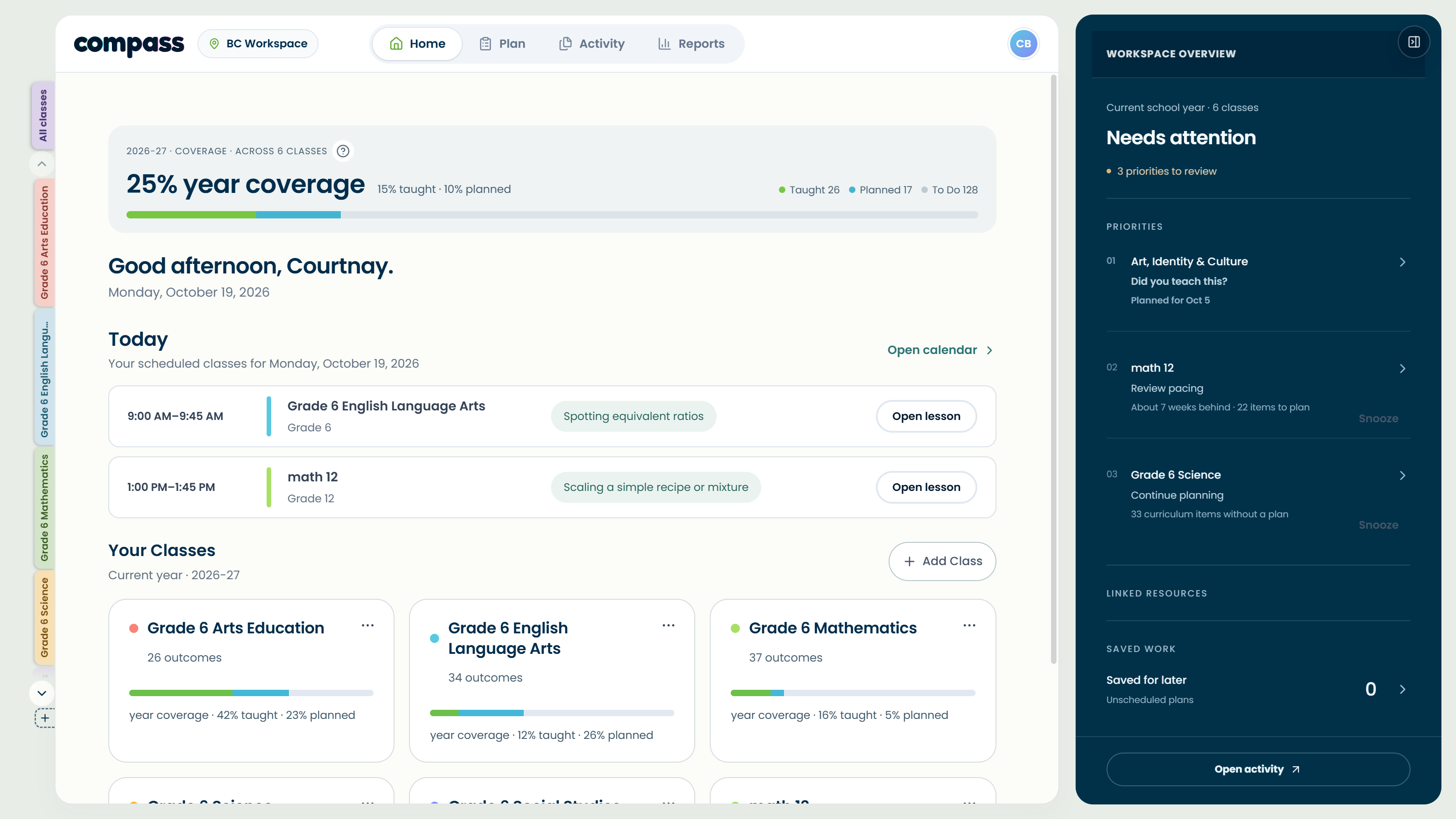
Log your unit in Compass to review planned and taught coverage. Check the suggested outcomes and confirm what was taught; a scheduled plan is not evidence that the teaching has happened.
Questions teachers ask first.

Plan the arc, not just the day.