

Ask an image generator for “a doctor” or “a family” a few times, and you might notice the results start to look pretty similar. That’s just how these tools tend to work. Without much direction, they lean on a default.
For most things, that default is harmless. For classroom materials, it isn’t. The images on your worksheets, slides, and resources are part of what kids quietly absorb about who belongs where. If the scientist is usually one kind of person, and the family is usually the same shape, it adds up over a year.
So we made a deliberate choice early on, because representation and inclusion matter to us. In CARL, inclusion is the default, not a setting you have to remember to switch on.
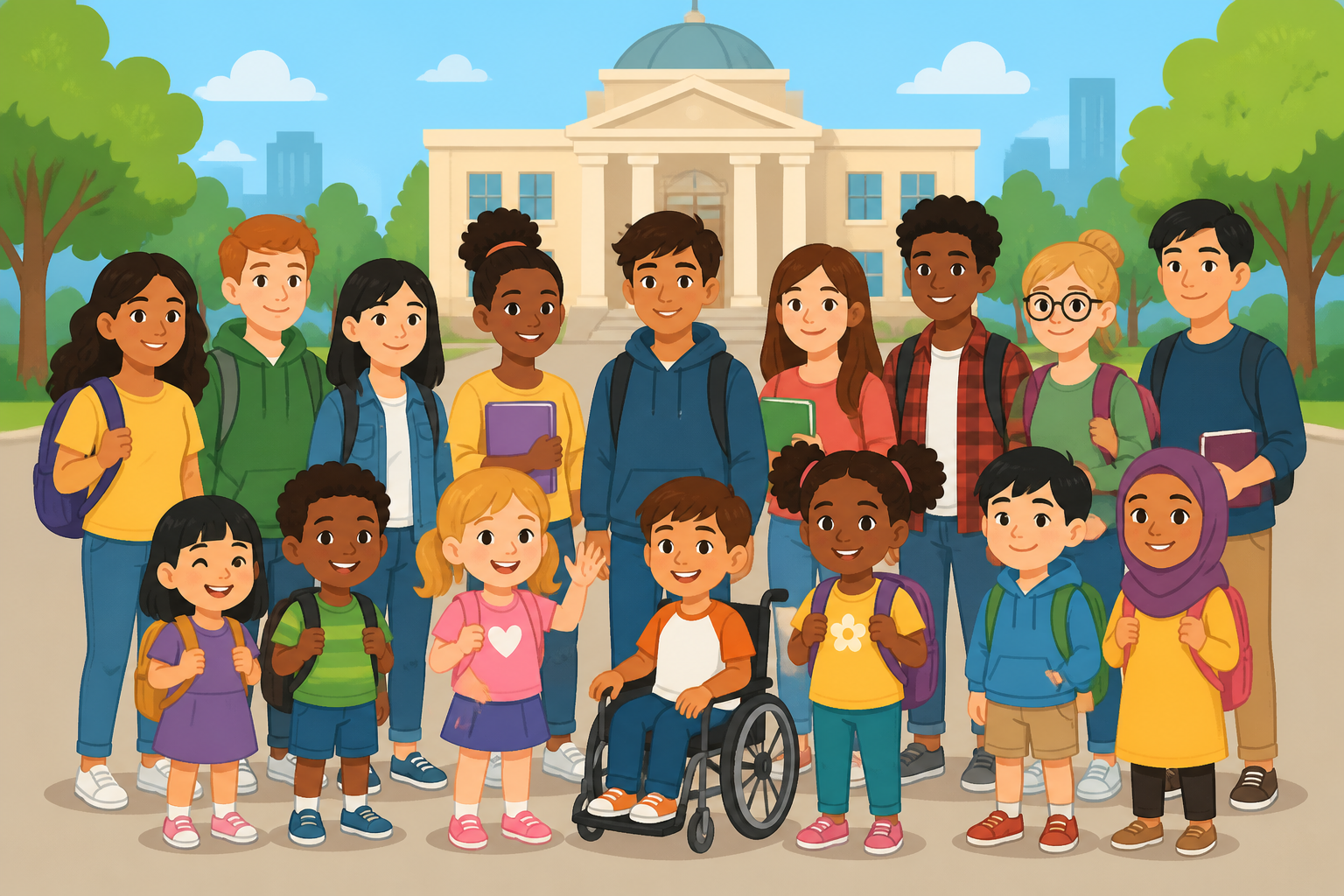
Here is what that means in practice. When you generate an image that includes people, CARL aims for realistic, context-appropriate diversity. Different races and skin tones. A range of ages and body sizes. Disabilities and the assistive aids people actually use. Different hair textures, cultural and religious dress, family structures, and roles. Shown naturally, not as tokens, and not turned into a lesson about difference. Just a group that looks like a real classroom.
The image above is the plainest version of it. A kid using a wheelchair, a teen in a hijab, a spread of ages and backgrounds, none of it staged or pointed. It just looks like a hallway at any school in the country.
Diversity without the stereotypes
Widening who appears is only half the work. The same guardrails are there to keep representation from sliding into stereotype, so a person’s background reads as part of who they are, not as shorthand or a costume. Drawing a varied cast is the easy part. Drawing it without caricature is the harder half, and it is the part we put the most care into.
It holds whatever style you choose
Getting this to work across styles took deliberate effort. We tested the prompts as photos, as illustrations, and as cartoons, and tuned them until the representation held no matter which look a teacher picks. Ask for the same thing in any of those styles, and the cast stays just as varied. That consistency matters to us. Inclusion that only shows up in one style isn’t really a default, it’s a coincidence.
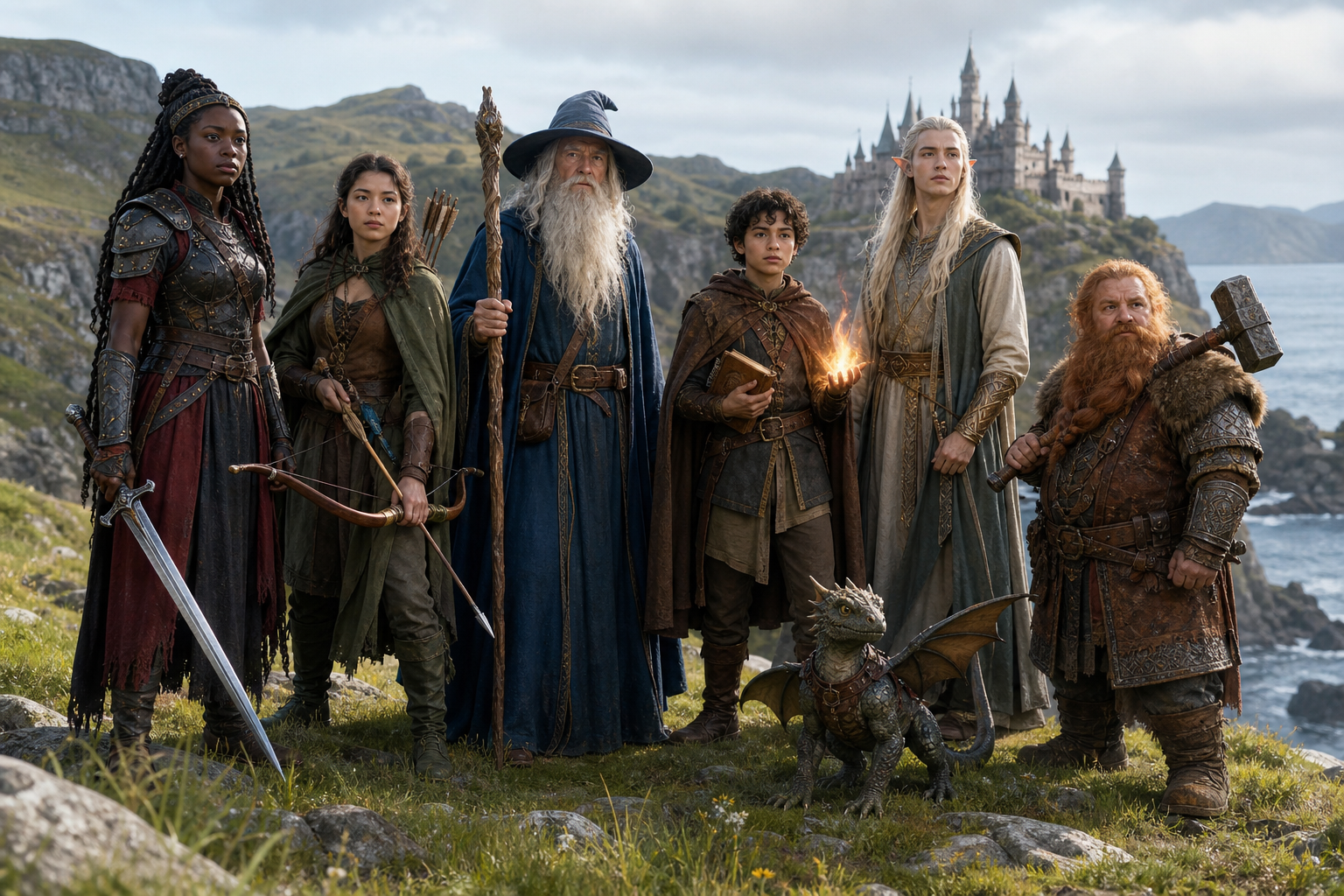
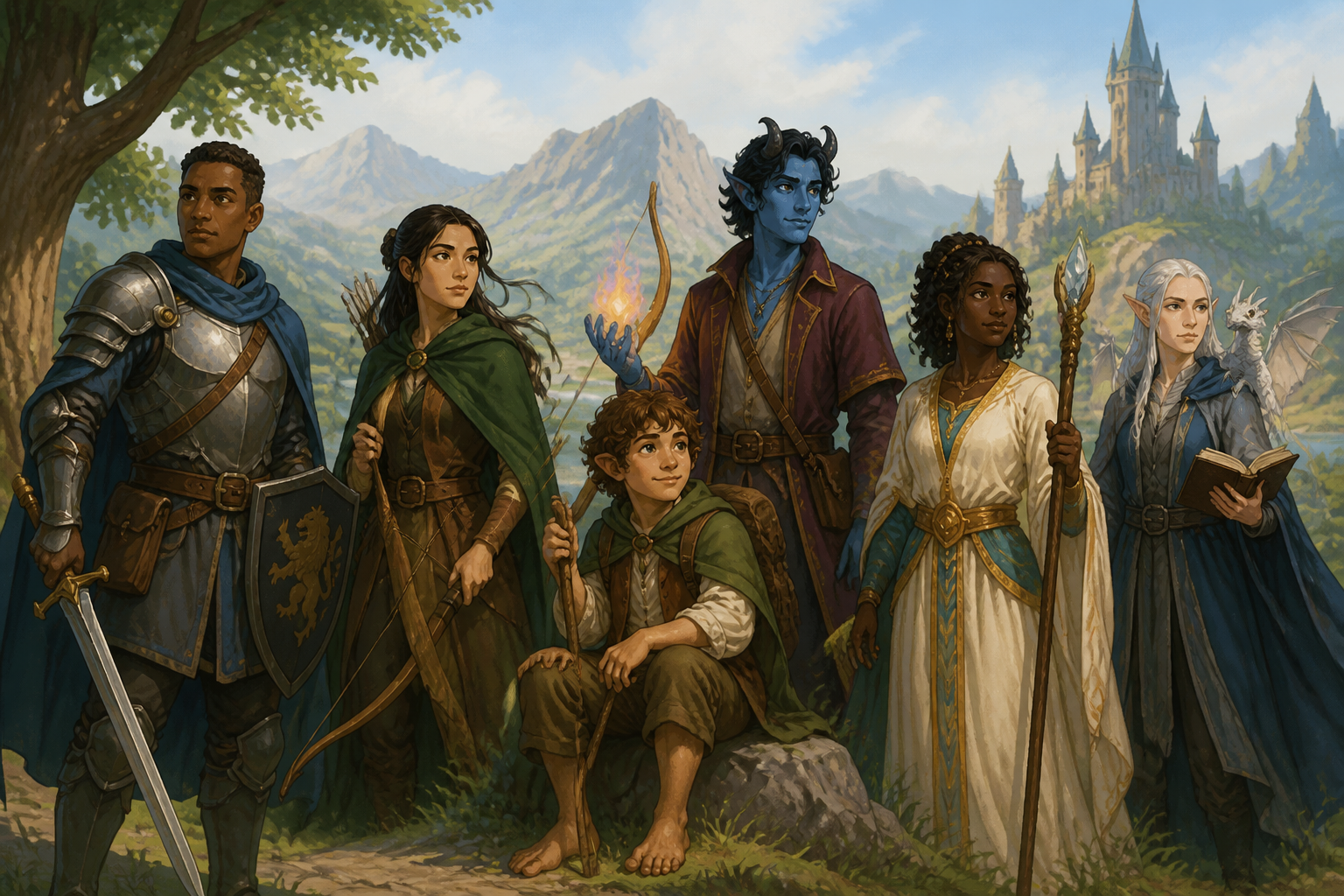
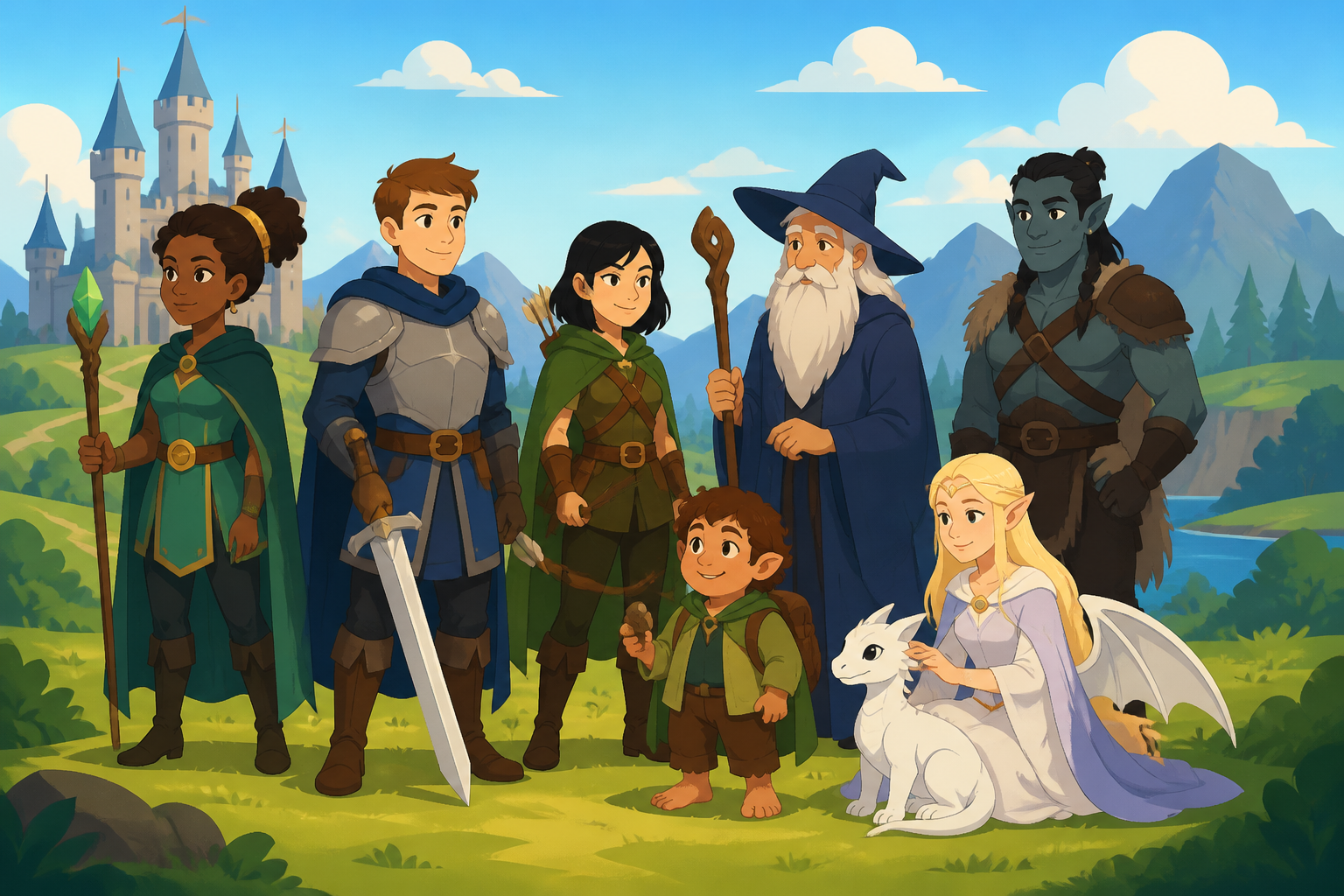
Those three are the same prompt, a group of imaginary fantasy characters, in photoreal, illustrated, and cartoon. Whatever style your lesson needs, the cast stays varied.
And notice what didn’t get lost. You asked for fantasy, so you still get the wizard, the elf, the dwarf, the dragon, the invented creatures. The diversity sits inside the world you asked for. It doesn’t override it. That part is deliberate. CARL is built to honour the specific thing you requested, whether that is a character, a place, or a moment in history. The default only fills in what you leave open.
There is something else worth sitting with in those fantasy images. A kid who uses a wheelchair, or wears a hijab, or rarely sees their face in a storybook, doesn’t just get included in the realistic park scene. They get to be the knight. The mage. The hero. Representation isn’t only “you exist.” Sometimes it is “you get to be the one the story is about.”
You’re still in charge
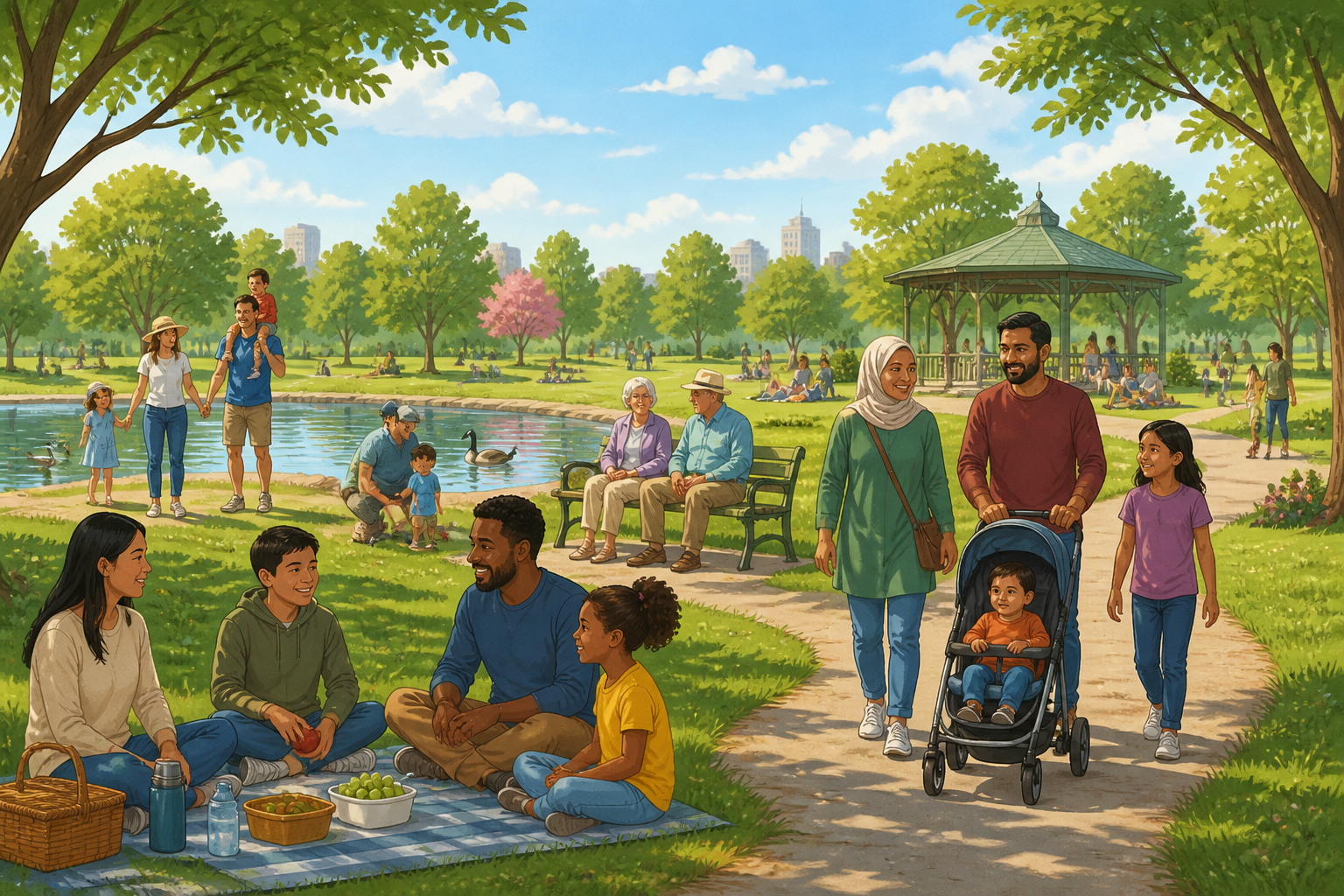
None of this takes the wheel out of your hands. If your lesson calls for a specific person, a named character, a particular place, or a historical context, you ask for it and CARL follows. The default isn’t there to argue with you. It is there for the ninety percent of the time when you just need “a family at the park” and don’t want to spell out who that family should be.
And like everything CARL makes, the images are a starting point you review, not a finished product you trust blindly. The default lowers the odds of a narrow or off result. It doesn’t replace your eyes on the page.
Where this leaves us
The point of all of this is small and kind of ordinary. A kid should be able to open a worksheet and see someone like them in it. That shouldn’t depend on the teacher catching it, or remembering to ask, or having time to redo the image. It should just be how the tool works when you are moving fast on a Tuesday night.
So that is how we built it. Inclusion as the default. Your specifics always honoured. Your judgment always in the loop.
Inclusion shouldn’t require extra effort.